Projects
Targeting pathogenic Enterobacteriaceae in ileal Crohn’s disease using D-amino acids

Crohn’s disease (CD), a subtype of inflammatory bowel disease (IBD), is associated with microbial dysbiosis characterised by an increased prevalence of bacteria from the Enterobacteriaceae family. The role of these pathogens in CD pathogenesis remains poorly understood; however, they represent an attractive target for therapeutics aimed at reducing CD-associated inflammation. D-amino acids (DAAs) have been shown to modulate pathogen behaviour, reduce Enterobacteriaceae blooms, and alleviate gastrointestinal inflammation in mouse models of colitis. Building on these findings, this project aims to:
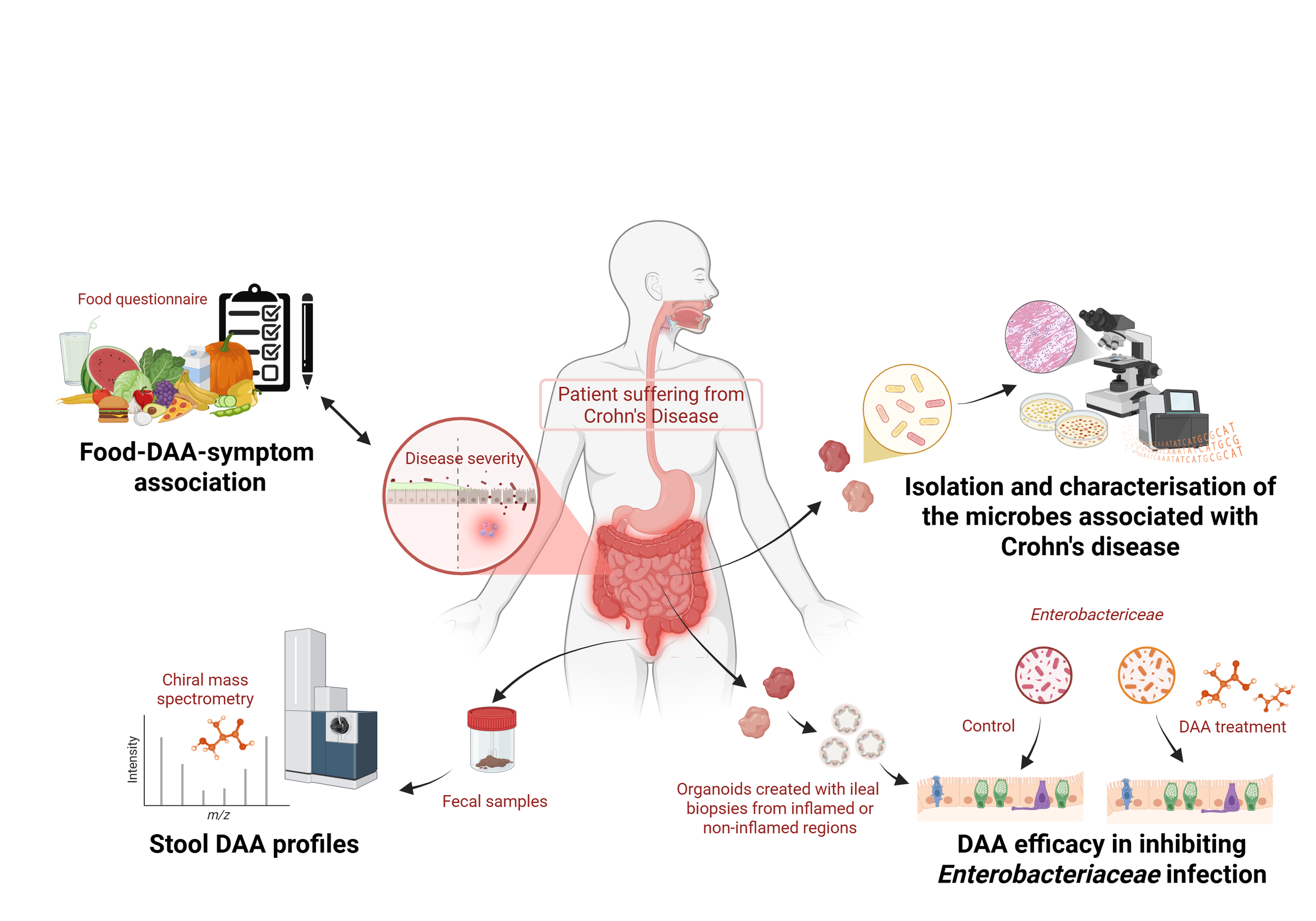
1. Identifying the DAA profile in CD patients compared with healthy controls using a chiral metabolomics workflow already developed by the O’Boyle group.
2. Characterising the microbial communities associated with CD, with an emphasis on the isolation of Enterobacteriaceae for further study. Enterobacteriaceae invasion and prevalence in the CD cohort will be analysed through live isolation and typing, community analysis, and histological spatial profiling.
3. Collaborating with a Patient and Public Involvement (PPI) group and investigating the associations between specific foods and symptomatic flares and remission across the spectrum of IBD using a food-frequency and symptom association questionnaire.
4. Assessing the therapeutic efficacy of DAAs in inhibiting Enterobacteriaceae infection using patient-derived enteroid cultures.
Overall, this study aims to advance our understanding of the role of Enterobacteriaceae in IBD and to provide a preclinical evaluation of the potential of DAAs as both biomarkers and therapeutic agents.